NJ Roof Guard Blog · Updated September 2026
Is Your NJ Roof Ready for Winter? The 6-Point Fall Inspection
Short answer: a 30-minute fall inspection — shingles, flashing, gutters, attic ventilation, debris, and chimney sealants — catches the small problems that become midwinter emergencies in NJ. Do it in September–November, before the first freeze.
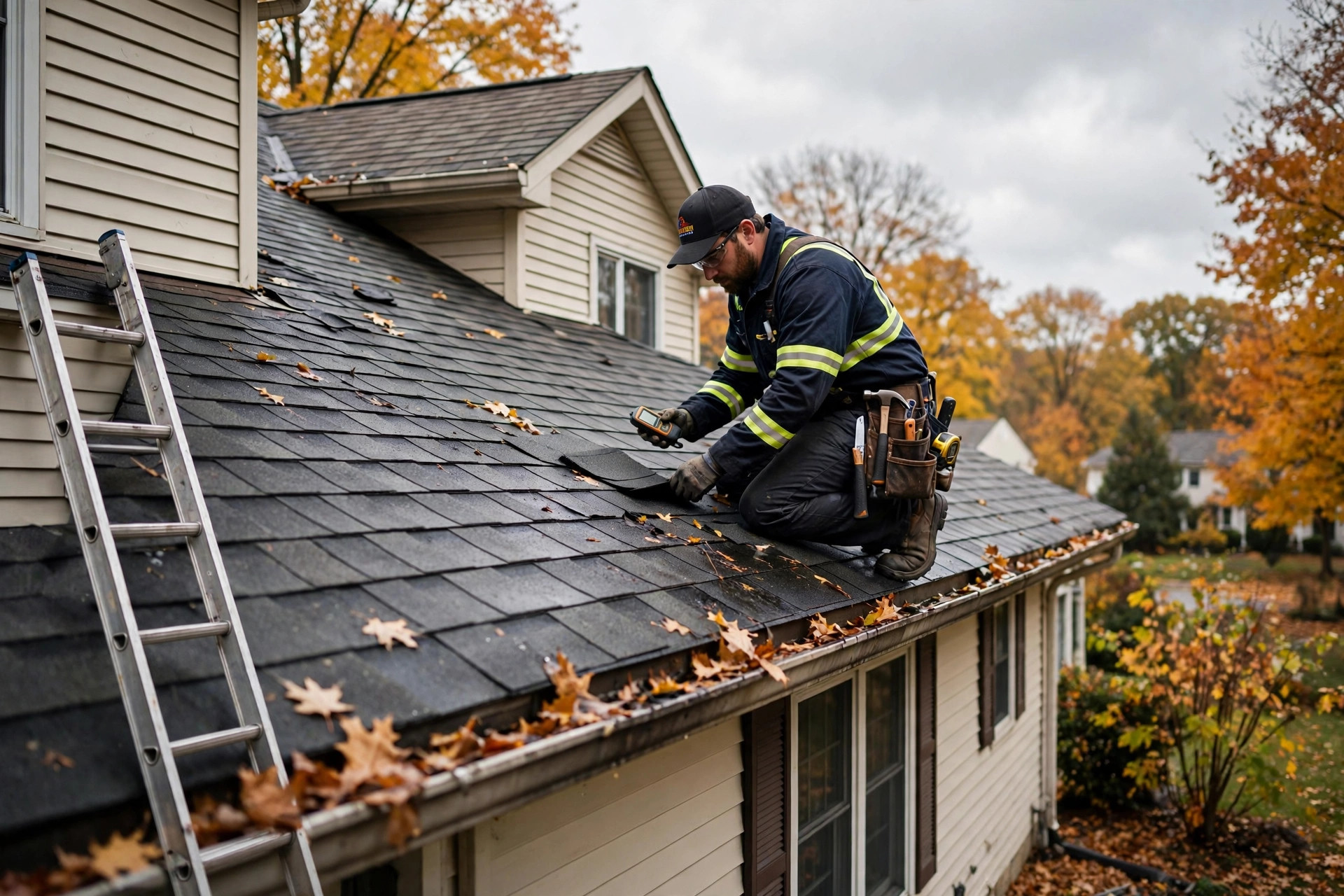
Why fall is the only inspection that matters in NJ
North Jersey roofs take a beating every winter: freeze-thaw cycles that pry shingles loose, nor'easters that drive rain sideways, snow loads that find every weak point, and ice dams that back water up under shingles. The damage you see in February almost always started as something small in October — a lifted shingle, a cracked flashing boot, a clogged gutter.
Fall is the window because repairs still cure properly. Roofing sealants and adhesives need reasonable temperatures to bond; once sustained cold sets in, many repairs have to wait for spring — meaning a leak that starts in January gets tarped, not fixed, for months. An inspection in September through November finds the problems while there's still time and weather to fix them right. The checklist below is exactly what local crews check on a fall visit — and most of it is free to us and to you. Call (973) 653-8456 if you'd rather have a pro do the looking.
The 6-point fall inspection checklist
1. Shingles: the visible surface. From the ground with binoculars, scan for missing shingles, tabs that are curling or cupping at the edges, cracked or blistered shingles, and dark patches where granules have worn off. One or two missing shingles is a quick repair; widespread granule loss or curling across the slope is a sign the roof is near the end. Also note any shingles lifting at the edges — those are entry points for wind-driven rain and the first to tear off in a winter storm.
2. Flashing, valleys, and penetrations. Most roof leaks don't start in the shingle field — they start where the roof meets something else. Check step flashing where the roof meets sidewalls, counter-flashing around chimneys, and the rubber boots around plumbing vent pipes (these crack with UV age and are the single most common leak source we find). Look at valleys for worn granules or rusted metal. On flat sections, check parapet flashing and any curbs or pipe penetrations.
3. Gutters and downspouts. Full gutters are a fall and winter hazard: water overflows, saturates the fascia and soffit, and freezes into heavy ice along the eave — which feeds ice dams. Clean gutters after the last big leaf drop (usually late November in North Jersey), check that gutters are firmly attached and pitched toward downspouts, and confirm downspouts discharge at least 4–6 feet from the foundation. Sagging or separated gutters need to be re-hung or replaced before ice loads them.
4. Attic ventilation and insulation — the ice dam connection. This is the point homeowners skip and then pay for. Ice dams form when heat escaping into your attic melts snow on the roof deck; the meltwater runs downhill, refreezes at the cold eave, and backs up under shingles. The fix isn't better shingles — it's a cold roof deck. In the attic, look for: insulation depth of 12–16 inches (R-38 or so), soffit vents that aren't blocked by insulation, daylight or water stains on the underside of the deck, and a ridge vent or gable vents that are actually open and flowing. If your attic feels tropical in fall, your roof will make ice dams in January. Poor ventilation also cooks shingles from below and shortens their life year-round.
5. Moss, algae, and debris. Shaded north-facing slopes in North Jersey grow moss and algae, which hold moisture against shingles and lift tabs as they expand. A gentle treatment in fall — not pressure washing, which strips granules — clears it before winter locks moisture in. Also clear leaf piles and branches off the roof surface: trapped leaves hold water against the shingles for weeks and stain them.
6. Chimneys, skylights, and sealants. Walk your eyes along the chimney crown (cracks let water into the masonry), the counter-flashing, and the caulk lines around skylights. Old, dried-out sealant is brittle and separates — re-sealing around skylights and penetrations in fall is cheap insurance. If the chimney crown is spalling or cracked, winter freeze-thaw will make it worse fast.
Get the Full 6-Point Inspection — Free
(973) 653-8456Tap to call nowWhat you can DIY vs. what needs a pro
Safe DIY, no ladder gymnastics required: ground-level shingle scan with binoculars; attic check for daylight, stains, and insulation depth; gutter cleaning from a stable ladder (with a spotter); trimming overhanging branches. These cost nothing and catch the majority of visible problems.
Leave to a pro: walking the roof (steep slopes and wet fall roofs are a fall hazard, and one wrong step damages shingles), flashing repairs, vent boot replacement, re-sealing skylights, anything near a chimney crown, and any attic work involving baffles or ventilation changes. A professional inspection also comes with photos and a written report — useful for insurance if a winter storm hits later. Most fall inspections in NJ are free or run $100–$250 for a written report, often waived when you book the repair.
The cost of skipping the fall inspection
Here's the math we see every February. A cracked vent boot found in October is a $250–$400 repair with proper sealant. The same boot ignored becomes a leak discovered when meltwater drips into the kitchen — now you're looking at a $1,500–$2,500 emergency visit plus drywall, insulation, and possibly mold remediation. A $300 flashing fix becomes $3,000+ of interior damage.
Emergency winter service is also just more expensive: crews work in freezing conditions, materials don't bond well, and many full repairs can't be done properly until spring — so you pay for a temporary patch and then the real fix anyway. The cheapest roof repair you'll ever buy is the one done in October.
The bottom line
Six points, one autumn afternoon: shingles, flashing, gutters, attic ventilation, debris, and chimneys. Catch them in fall while repairs still cure properly, and your roof goes into winter with its best chance of coming out dry. Skip it, and February finds every weakness at emergency rates. The inspection is fast and often free — the consequences of skipping it aren't.
Fall Inspection Slots Fill Up Fast
Book your free 6-point fall inspection now — before the first freeze makes it too late.
(973) 653-8456Tap to call nowWinter Roof Inspection FAQs
When should I get a fall roof inspection in New Jersey?
September through November, before the first hard freeze. Early fall gives you time to schedule repairs before roofers book up and before sealants stop curing properly in cold temperatures.
How much does a fall roof inspection cost in NJ?
Many NJ roofers — including NJ Roof Guard — offer free or low-cost inspections, especially in fall. A paid inspection with a written report typically runs $100–$250, and it's often waived if you book the recommended repair work.
What causes ice dams on NJ roofs?
Ice dams form when heat escaping into the attic melts snow on the roof deck; the meltwater runs down, refreezes at the cold eave, and backs up under shingles. Poor attic ventilation and thin insulation are the root causes — not the shingles themselves.
Can I do a roof inspection myself?
Yes, from the ground and from the attic: check for missing or curled shingles with binoculars, look for daylight or water stains in the attic, and clean your gutters. Leave roof walking, flashing repairs, and sealant work to a pro — falls and voided warranties aren't worth it.
What happens if I skip a fall roof inspection?
Minor issues become emergencies: a $300 flashing fix becomes a $2,000+ midwinter leak repair with water damage, and emergency winter service costs far more because crews work in freezing conditions and many roofers won't do full repairs until spring.
Should I clean leaves off my roof and gutters before winter?
Yes. Leaf-clogged gutters overflow, saturate fascia boards, and feed ice dams. Clear gutters and downspouts after the last big leaf drop — usually late November in North Jersey — and make sure downspouts discharge away from the foundation.